


AI for generation
Creating without soul or conscience, but with data! Generative AI produces texts, images, sounds or videos by learning the structures of language and forms, without taking a step back or understanding what it is generating. Popularised by tools such as ChatGPT, generative AI is transforming our daily lives, while raising major ethical issues: bias, hallucinations, energy consumption, copyright and data exploitation.




What is generative AI?
What is generative AI?
The vast majority of AI models that have been made public and have had a significant social impact are models of Generative AI.
Quite often, the use of the word "AI" in popular parlance refers to this specific branch of AI, the principle of which is to produce complex objects text, image, video or sound.
From the 2010s, and thanks to advances in deep learning and new architectures that generative AI is changing dimension. A famous architecture invented in 2014, the GANs (Generative Adversarial Network), works like a duel.
One AI model (the generator or forger) tries to create a fake image and a second (the critic) tries to detect whether the image is real or generated. With practice, the faker becomes so good that the critic can no longer tell the difference.
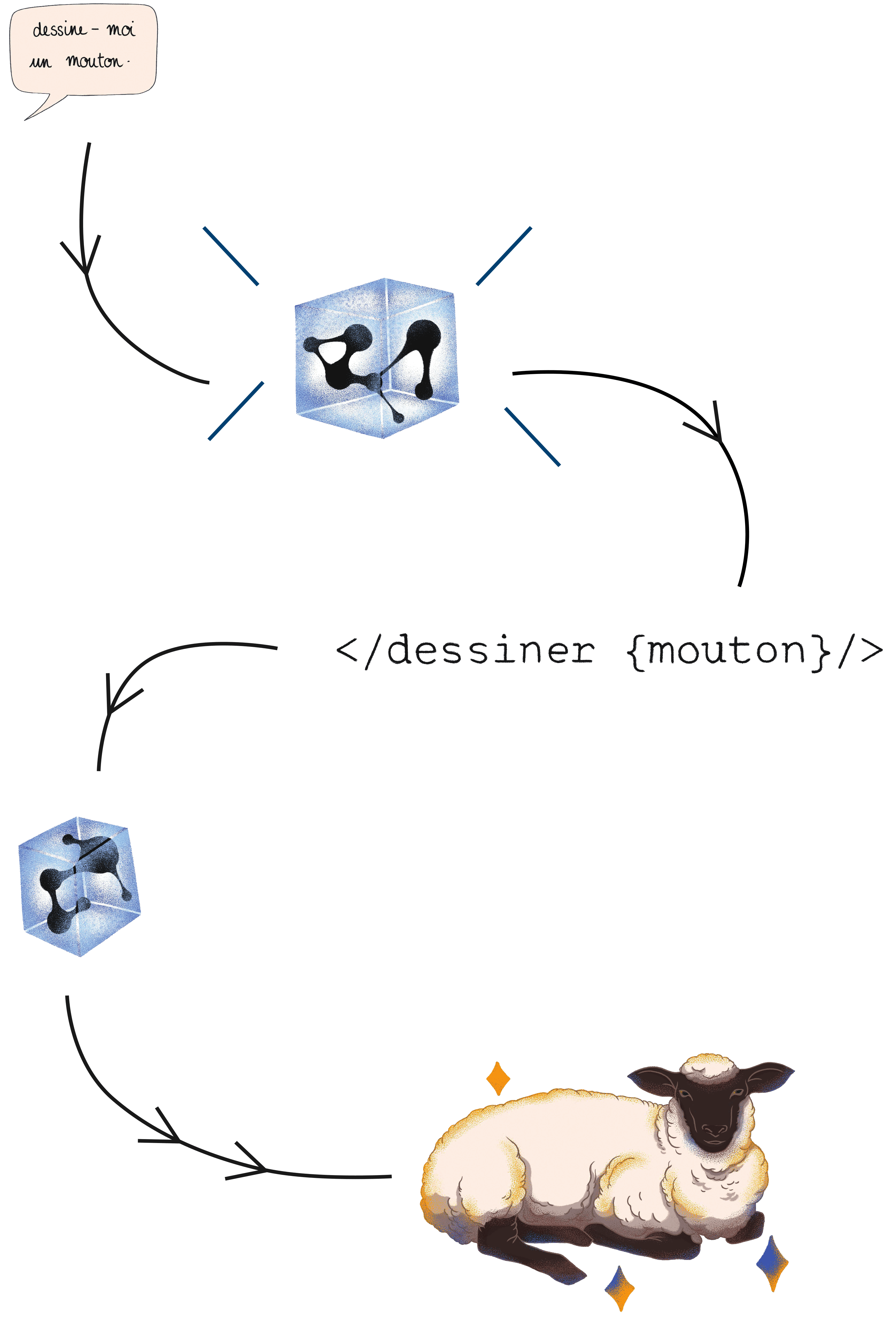
From a technical point of view, the first generative tools were often based on a structure of structure called encoder-decoder.
This structure is made up of two neural networks:
1. The first (encoder) converts data (e.g. a sentence) into abstract computer code.
2. The second (decoder) converts this code into a new sentence(or image) as required.
For example, to translate, the second network decodes the abstract concepts in the English sentence and reconstructs them in French.
In detail, these models, which are capable of processing sequential information such as sentences, are generally based on networks of specific neurons such as recurrent networks or transformers.